

If you go to the gym regularly and also enjoy using a sauna, you might be curious whether you should sauna before or after gym.
And if you look up online, people’s opinions are very divided.
Some people would suggest you use sauna before gym as it helps warm up muscles and improves flexibility.
Others insist that a sauna should always come after gym because that’s when your body needs recovery, and saunas help with that.
So, who is right?
Well, both have their own benefits. And the best time to use a sauna depends on your fitness goals, the type of exercise you’re doing, and how your body responds to heat.
In this blog, I have explained it all. Read on to know:
- Whether you should use a sauna before gym or after
- The pros and cons of using sauna before and after workout
- Why so many people prefer using sauna after gym
- Practical tips to help you sauna safely around
And a lot more
Key takeaways
- Most people use a sauna after the gym for relaxation and post-workout recovery.
- A short sauna session before gym is also good for pre-workout flexibility.
- The ideal sauna routine depends on your workout, overall health, and how well you tolerate heat.
- Whether you use a traditional or infrared sauna, the same basic safety principles apply.
Should you sauna before or after gym?

The best answer for most people is sauna after gym.
You see, using a sauna after exercise is better because your workout is already complete. And you can now simply focus on relaxing, cooling down, and recovering.
You can also sauna before gym. In fact, a lot of people do this for better blood circulation and muscle relaxation. They say this helps them move more comfortably during the first part of their workout.
However, there’s also a downside of sauna before gym.
A sauna raises your core body temperature and makes you sweat before you’ve even started exercising. So, if your workout session is too long, you might begin your workout already slightly dehydrated or feeling more fatigued than usual, just like sauna during a heatwave.
That’s why fitness professionals recommend sauna as part of your recovery routine rather than your warm-up.
Pro tip: If you’re doing a light mobility exercise or just gentle stretching, a short sauna beforehand will make exercise more comfortable.
Pros and cons of sauna before gym
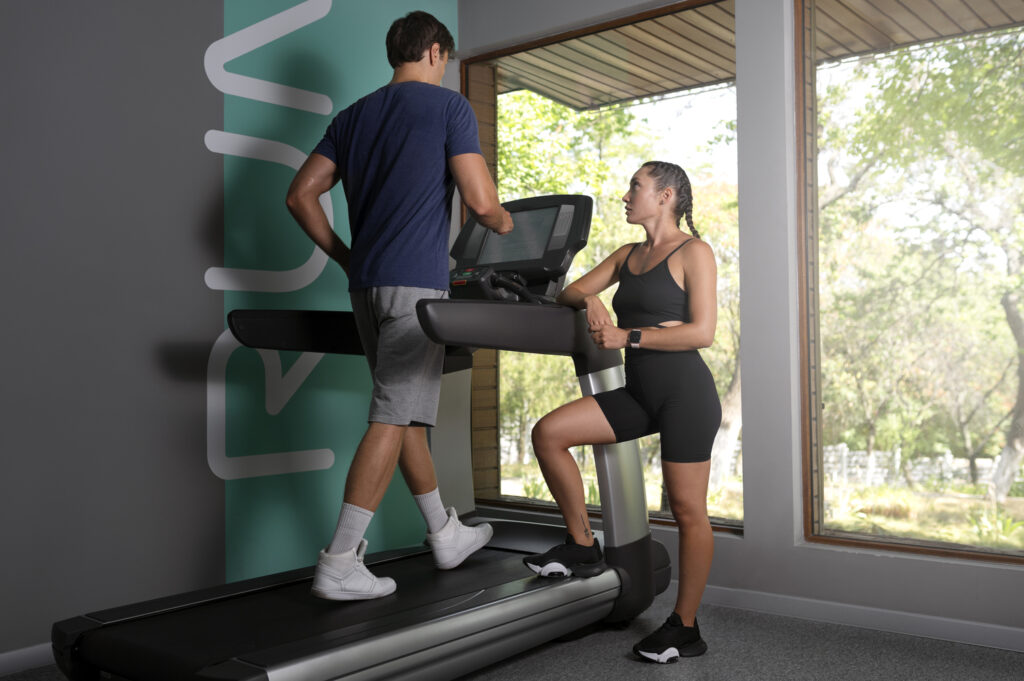
If you use a sauna before heading to the gym, it will help you feel flexible and ready to move. But then, there are also some drawbacks of pre-workout sauna that you should know about.
Let’s look at both sides of the story:
Pros
1. It helps loosen your muscles
One of the biggest reasons people use a sauna before exercise is because sauna heat makes the body feel more relaxed.
You see, as your muscles warm up, they feel less stiff. Also, your joints move more comfortably. This is helpful during the first part of the workout.
That said, a sauna isn’t a replacement for a proper warm-up.
You’ll still want to spend a few minutes doing dynamic stretches or light cardio before jumping into your workout.
2. It increases blood circulation
Heat naturally widens blood vessels, allowing blood to circulate more easily throughout your body.
And people say this leaves them feeling more prepared for exercise, especially before activities like pilates or yoga that require flexibility or mobility.
Cons
1. It is not be ideal before intense workouts
When you sit in a sauna, your body starts sweating before you’ve even picked up a weight or stepped onto the treadmill. This means you’re already losing fluids.
Now, if you go straight into a demanding workout without replacing those fluids, you will feel more tired, become dehydrated quickly, or notice your performance isn’t as good as usual.
2. It isn’t the best choice for every type of training
A sauna before gym makes sense only if you’re planning to do a light workout.
For instance, if you’re heading in for gentle mobility work or yoga, a short sauna session beforehand will feel perfectly comfortable.
But if you’re preparing for heavy weightlifting, sprint intervals, or high-intensity circuit training, you’ll want to save the sauna until afterwards.
That’s because your workout itself places enough demand on your body. And adding heat beforehand will simply make the session feel harder than it needs to.
Overall, here are the pros and cons of sauna before gym in short:
| Pros | Cons |
| Might help muscles feel looser | Can increase dehydration before exercise |
| Can improve your feeling of flexibility | Might reduce energy for intense workouts |
| Helps some people relax before training | Doesn’t replace a proper warm-up |
| Might feel comfortable before light exercise | Not ideal before long or high-intensity sessions |
Pros and cons of sauna after gym

Most people prefer to use the sauna after gym.
Why?
That’s because by the time you’ve finished exercising, your body has already done the hard work. Your muscles have been challenged, your heart rate has been elevated, and you’re ready to slow things down.
And this is where a sauna fits in naturally.
Yes, there are some downsides of sauna after gym, but the benefits clearly outweigh them.
Let’s look both the pros and cons:
Pros
1. It helps you relax after exercise
After an intense workout, your body stays in a heightened state for a while. Your breathing is faster than usual, your heart is working harder, and your muscles feel tight.
In this situation, spending a few minutes in a sauna gives you the chance to slow down and unwind.
The warmth and löyly (steam) in sauna feels soothing after exercise. And people say it helps them transition from workout mode to recovery mode.
2. Your workout is over and you need not conserve energy
This might sound obvious, but it’s actually one of the biggest advantages.
Since your workout is over, you don’t have to worry about conserving energy for squats, a long run, or an intense cycling session.
Instead, you can simply focus on relaxing before heading home, eating a nutritious meal, and rehydrating.
That’s one of the main reasons experts also recommend using sauna after gym rather than before.
3. It supports your recovery
Sauna feels excellent after intense training. You sit still, breathe slow, and give your body a chance to recover.
Also, according to research, regular sauna use alongside exercise supports cardiovascular fitness and endurance over time.
Note: Sauna shouldn’t replace proper recovery habits like good nutrition, hydration, sleep, and rest days. It can only complement them.
4. It gives you time to unwind mentally
After a challenging workout, all you want is a quiet place to unwind for a few minutes.
And the warm sauna environment provides just that. It helps you to slow down, disconnect from your phone, and simply relax.
For gym-goers, this mental reset is just as valuable as the physical benefits of workout.
Cons
1. It increases the risk of dehydration
The biggest downside of using a sauna after gym is dehydration.
You see, you’ve already lost fluids during your workout through sweat. And once you step into the sauna, your body continues sweating as it responds to the heat.
That’s why it’s important to drink water after exercising and continue rehydrating once your sauna session is over. In fact, if you’ve had a particularly intense workout or exercised in hot weather, replacing those lost fluids becomes even more important.
2. It can cause overheating
Another thing to keep in mind is that your body is already warm after exercise.
If you’ve just finished a long run, an intense strength session, or a high-intensity workout, your core body temperature is already high.
So, going straight into a hot sauna without giving your body a chance to cool down can place extra stress on it. Worse, it can even cause overheating.
That’s why I suggest you give yourself a few minutes to recover first. Take a short walk, allow your breathing and heart rate to settle, and have some water before entering the sauna.
Overall, here are the pros and cons of sauna after gym in short:
| Pros | Cons |
| Fits naturally into your recovery routine | You still need to rehydrate afterwards |
| Helps you relax after exercise | Might not be suitable if you’re already dehydrated |
| Lets you unwind once your workout is complete | Should be avoided if you feel dizzy or unwell |
| It complements long-term cardiovascular and endurance training | Long sessions can increase the risk of overheating |
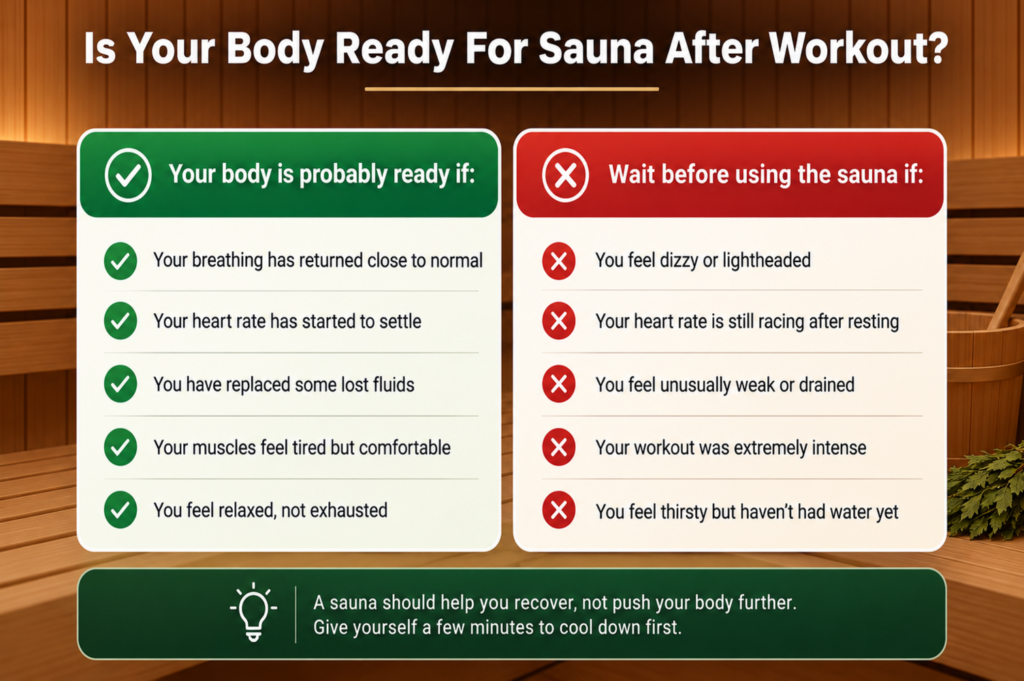
Sauna before or after exercise: Which is better for you?
The best time to use a sauna depends on what you’re hoping to get out of it.
For instance, if your goal is to feel looser before exercising, you should sauna before gym. And if you want to relax and recover afterwards, you should sauna after gym.
Let’s look at a few common fitness goals and see which option makes the most sense.
A. If your goal is better recovery
A sauna after gym is usually the better choice. That’s because once your workout is over, you can simply focus on cooling down gradually, relaxing, and rehydrating.
B. If your goal is improving flexibility
A short sauna before workout will help your muscles and joints feel less stiff.
However, it should never replace a proper warm-up. You’ll still need dynamic stretches and movement before starting your workout.
C. If your goal is lifting heavy weights
You’re generally better off saving the sauna until afterwards.
That’s because heavy strength training demands a lot from your muscles and nervous system. And going into that workout already warm and slightly dehydrated isn’t ideal for most people.
D. If your goal is endurance training
Most endurance athletes prefer to use the sauna after gym rather than before as using a sauna before workout will increase fluid loss.
E. If your goal is simply to relax
A sauna after gym is better. You’ve finished your workout, there’s nothing left to do, and you can fully switch your focus to recovery.
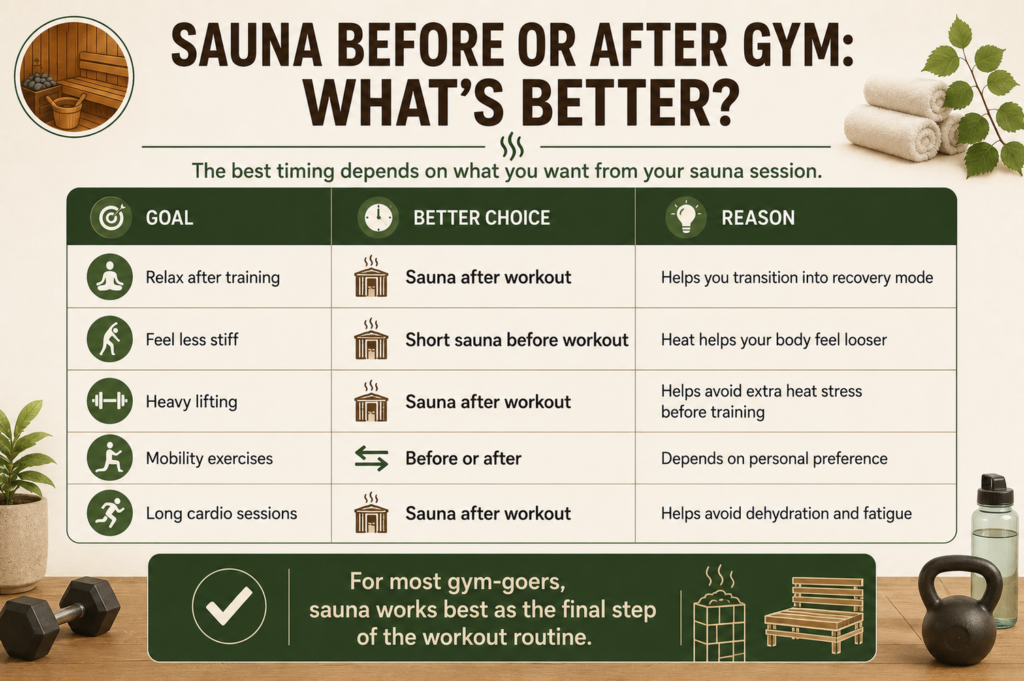
Bonus: Here are some safety tips for using sauna after gym
| Safety Tip | What To Do |
| Stay hydrated | Drink water before and after your workout and sauna session |
| Warm up properly | Use dynamic stretches or light movement before exercising |
| Keep sessions short | Limit your sauna time and avoid pushing yourself too far |
| Listen to your body | Leave the sauna if you feel dizzy, uncomfortable, or unwell |
| Prioritise overall recovery | Focus on good nutrition, sleep, hydration, and rest |
Final words
When it comes to choosing between sauna before or after gym, most people prefer using a sauna after gym. It fits naturally into their recovery routine and gives them a chance to relax after exercise.
That said, a sauna before workout isn’t a bad idea either. If your sauna session is short, you’re hydrated, and you’re doing lighter exercise, it will help you feel more relaxed and ready to move.
So, choose a timing that best suits your workout, and don’t be afraid to cut a session short if something doesn’t feel right.
Got more questions or want ot install a sauna in your home?
You can get in touch with us!
At Steam Shower and Sauna, we offer a wide range of premium sauna heaters, accessories, and components from the most reputed brands.
Whether you’re upgrading your current sauna or building a new one, we’re here to help you find the right products for your space.
FAQs about sauna before or after gym
Is it better to sauna before or after gym?
For most people, using a sauna after gym is the better option. It fits naturally into your recovery routine and avoids starting your workout already warm and dehydrated.
Can I use a sauna before every workout?
You can, but it’s generally best to keep the session short and continue with a proper warm-up afterwards. A sauna shouldn’t replace stretching or light movement before exercise.
How long should I stay in a sauna after working out?
Most healthy adults can comfortably stay in a sauna for 10 to 15 minutes after exercise. If you’re new to sauna bathing, start with a shorter session and gradually increase it as your body adapts.
Should I shower before using a sauna after the gym?
Many people prefer to take a quick shower before entering the sauna to rinse off sweat. It also helps you feel more comfortable during your session.
Can I use an infrared sauna after a workout?
Yes. An infrared sauna can be used after a workout in much the same way as a traditional sauna.
Just remember to stay hydrated, keep your session reasonable, and leave the sauna if you begin to feel unwell.

Jordan is a content writer covering steam showers, saunas, home wellness, and modern bathroom design. With a focus on practical, research-based information, Jordan helps readers make informed decisions about creating relaxing, spa-inspired spaces at home.